

Faculty Research Spotlight: José “Pepe” Sánchez
Understanding How Cities Function and Why Collaboration Matters More Than Ever
Laura McHugh | University Communications Apr 13, 2026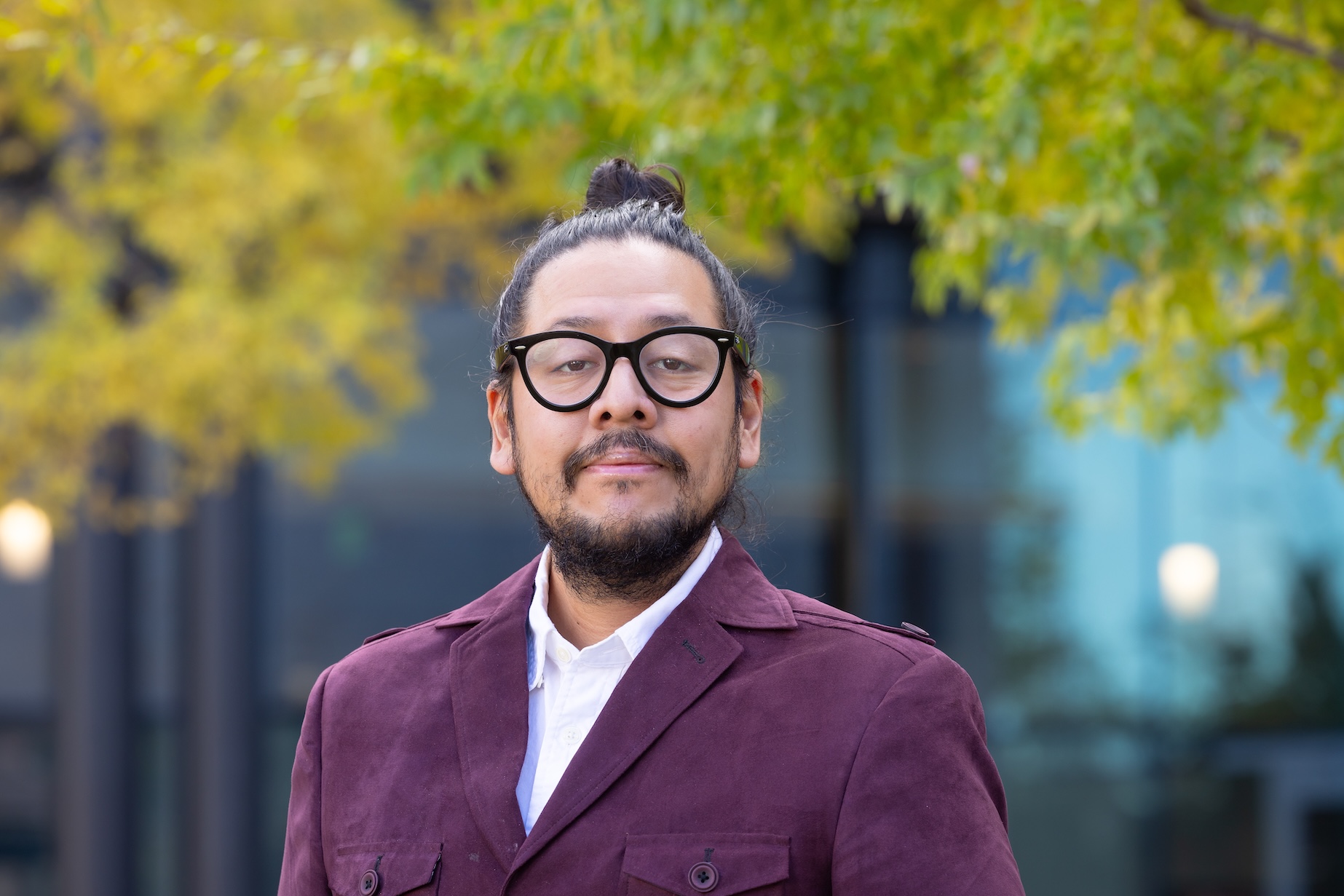
Cities are often described as chaotic, fragmented, and overstretched. Yet every day, they continue to function, delivering services, supporting millions of residents, and adapting to constant change. According to José “Pepe” Sánchez, assistant professor at the University of Colorado Denver School of Public Affairs, this endurance is not accidental. It is the result of governance.
Born and raised in Mexico City and shaped by years living and working in Chicago, Sánchez studies large metropolitan areas. His research focuses on city governments and urban policy, with a special focus on major cities and the organizations they work with.
“Cities live in a delicate balance,” Sánchez explains. “They appear resilient, even indestructible, but that resilience comes from the decisions, coordination, and sometimes tensions among many actors operating within and beyond city boundaries.”
Governance as the Foundation of Urban Life
At the center of Sánchez's work is governance, the systems, rules, and relationships that enable cities to function despite overlapping jurisdictions, limited resources, and complex social challenges. Local and urban spaces, he argues, are both where many urban problems originate and where meaningful solutions can be found.
His research focuses on city challenges, including housing affordability, unhoused populations, unequal access to services, and managing shared resources like water, transportation, and regional economic development. These issues often cross city and agency boundaries, which makes collaboration essential.
“While the biggest challenges we face are global and borderless, their impacts show up locally,” Sánchez says. “And cities are often where the most innovative responses emerge.”
Why This Research Matters Now
For people who live in cities, governance decisions shape everyday life in very real ways. They affect whether housing is affordable, how quickly services reach people in need, how reliable water and transportation systems are, and how well communities can respond to extreme weather or economic disruptions. When city governments are stretched thin or struggle to work across boundaries, it is residents who feel the consequences most directly.
Sánchez’s research focuses on how cities and the organizations that serve them work together to meet these challenges. By studying how local governments coordinate with nonprofit organizations, regional partners, state and federal agencies, and private groups, his work highlights what helps public services function more fairly and effectively. The goal is to identify approaches that improve how resources are delivered, reduce gaps in access, and support stronger, more resilient communities across metropolitan regions.
Studying Collaboration Through Data and Experience
Sánchez is a mixed-methods scholar, combining quantitative analysis with qualitative research. Large datasets and statistical models allow him to identify patterns in urban governance across regions, while interviews and case studies provide insight into how collaboration works on the ground.
One of his current projects looks at how groups across the country work together to support unhoused populations. Sánchez is building a national dataset that brings together the rules and practices used by Continuum of Care networks, which are partnerships of organizations that provide housing and other services. After spending significant time putting the data together, the project is now moving into the next stage, where he will analyze the data to better understand what works.
There are now countless artificial intelligence agents, and each day more parts of the research process can be automated to analyze data quickly. While these tools can be helpful for certain tasks, Sánchez emphasizes that the most fundamental and complicated parts of research remain unchanged.
Identifying meaningful questions of public life, framing them clearly, and developing creative research designs are still deeply human endeavors. Electronic tools are effective at producing summaries and speeding up technical work, he notes, but humans are better at recognizing what is missing and why it matters.
Teaching at the Intersection of Theory and Practice
At CU Denver’s School of Public Affairs, Sánchez teaches public policy analysis and has taught courses in urban policy and metropolitan governance. His teaching philosophy emphasizes discussion and shared learning, drawing heavily on students’ professional experience.
Many SPA students are already practitioners working in government, nonprofit, and policy roles. Their insights, Sánchez says, enrich classroom conversations and help bridge academic research with real-world challenges. “They provide a unique perspective of both a practitioner knowledgeable on a specific policy domain and also a curious mind, willing to use the classroom to increase their knowledge and everyone else's knowledge,” he says.
Looking Ahead
As cities continue to evolve, Sánchez's research agenda remains dynamic. While some urban challenges persist across generations, others, such as adapting to extreme weather or shifting global markets, are becoming increasingly urgent. His future work will continue to track how cities respond to these pressures and how governance networks shape outcomes.
Above all, Sánchez hopes his research reinforces a simple but powerful idea: complex problems cannot be solved by isolated actors.
“Working together is not new,” he says. “But it is needed now more than ever. Cities have always depended on collaboration. Understanding how that happens is essential to building more just and resilient urban futures.”